When Wild Love Collides with the New World of the Modern American West
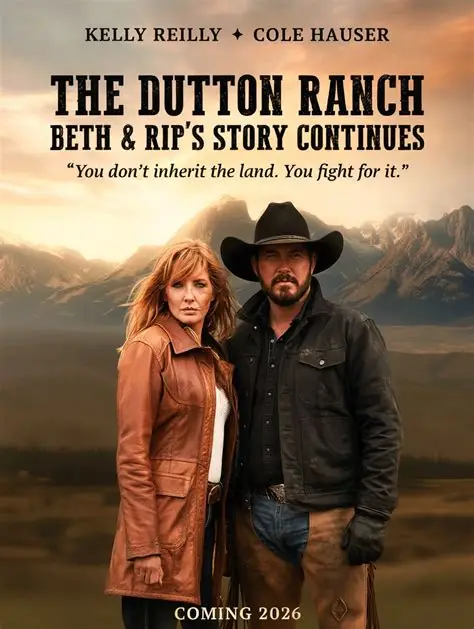
After nearly a decade of dominating the small screen, Yellowstone became more than a hit television series—it evolved into a cultural phenomenon. Taylor Sheridan’s modern Western universe, where land equals power, family is a battlefield, and violence is often the final language spoken, reshaped how the 21st century views the Western genre. And just when the Dutton saga seemed to have reached its conclusion, THE DUTTON RANCH — BETH & RIP’S STORY CONTINUES (2026) emerges with a clear message: the legend is not over—it is simply changing form.
A New Chapter, Not a Fresh Beginning
The Dutton Ranch is not a conventional spin-off. It does not look back to distant generations like 1883 or 1923, nor does it introduce an entirely unfamiliar bloodline. Instead, it moves forward directly from the ashes of Yellowstone, following Beth Dutton and Rip Wheeler—arguably the most volatile souls in the franchise—as they attempt to build a life beyond the shadow of John Dutton’s empire.
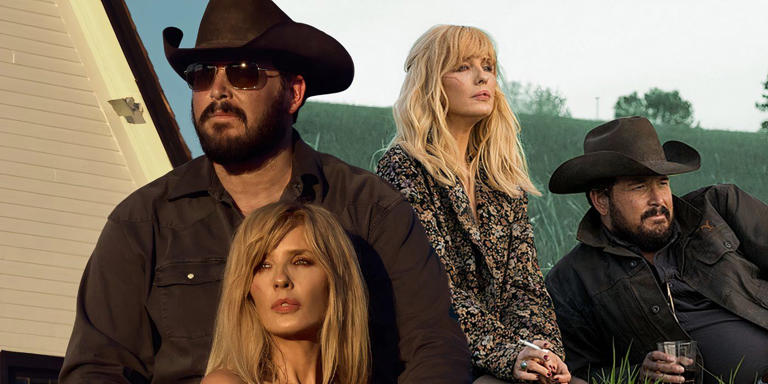
Beth (Kelly Reilly) and Rip (Cole Hauser) leave the legendary Yellowstone Ranch carrying deep psychological scars, blood-soaked memories, and a deeply human desire: to finally live for themselves. But in the American West, peace is never permanent—it is merely an intermission between conflicts.
Beth Dutton: When Madness Becomes Identity
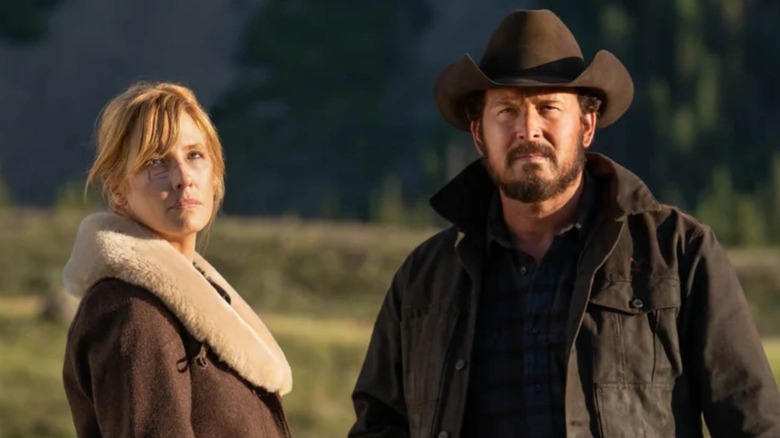
Beth Dutton has never been easy to love. She is sharp, ruthless, dangerously intelligent, and fueled by a rage that never truly fades. In The Dutton Ranch, Beth is no longer her father’s strategic weapon. Stripped of the empire she once defended, she is forced to confront a terrifying question: who is Beth Dutton when there is no war to fight?
The series dives into Beth’s identity crisis—a woman who has spent her entire life in combat mode. Without an enemy standing directly in front of her, Beth must face herself: the grief of losing her father, the trauma of losing her ability to have children, and the haunting realization that survival alone does not equal fulfillment.
Kelly Reilly once again proves why Beth Dutton stands as one of the most daring and complex female characters in modern American television. In The Dutton Ranch, Beth screams less, destroys less—but becomes more dangerous, because her silence now carries the weight of someone who has survived for far too long.
Rip Wheeler: A Man Learning to Exist Outside of War
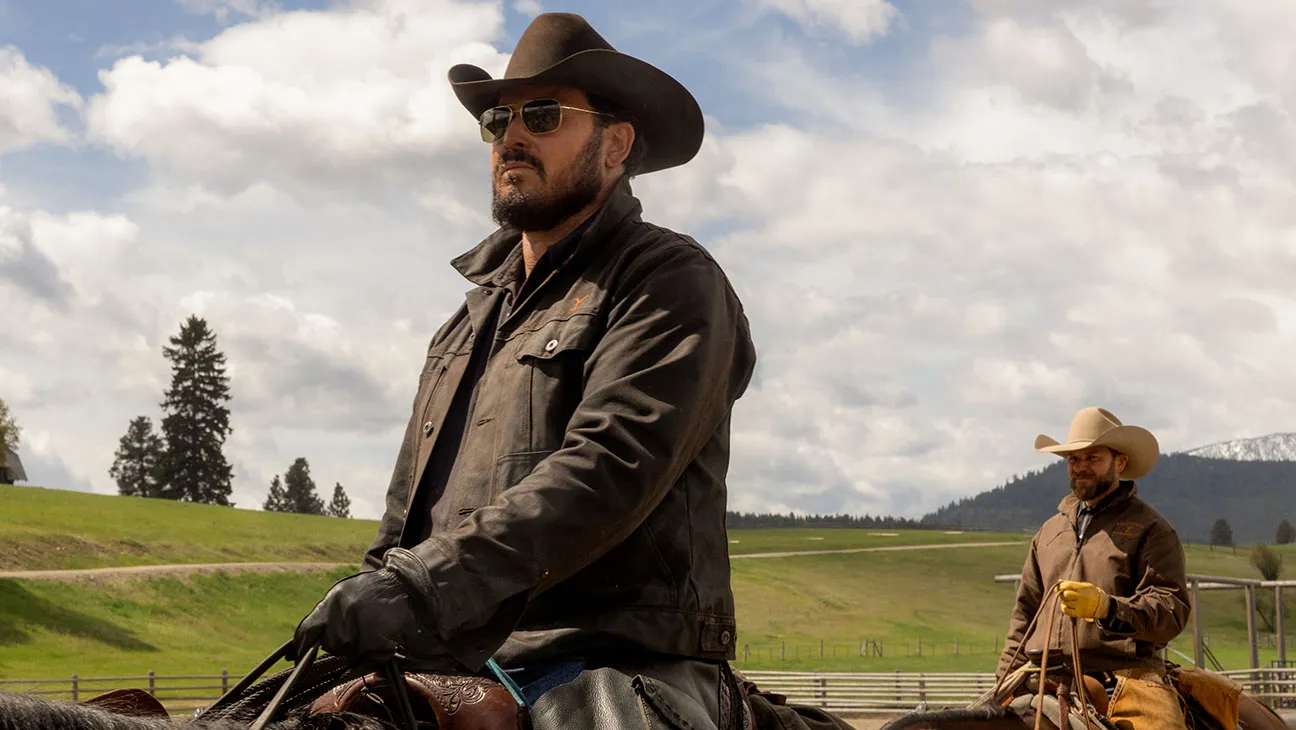
If Beth is fire, Rip Wheeler is earth. In Yellowstone, Rip existed as a loyal enforcer—a soldier who never asked questions. But without John Dutton to serve, Rip must confront a new identity: husband, father figure, and true ranch owner.
Cole Hauser delivers a quieter, more weathered Rip. He is no longer just the violent extension of the Dutton legacy, but a man attempting to build a life that does not rely on brutality—even though he understands better than anyone how unrealistic that hope may be.
The Dutton Ranch places Rip in morally complex situations: Does he protect his land the old way, with fists and gunfire? Or does he adapt to a modern West governed by laws, corporations, and political influence?
A New Ranch — Old Enemies, Modern Threats
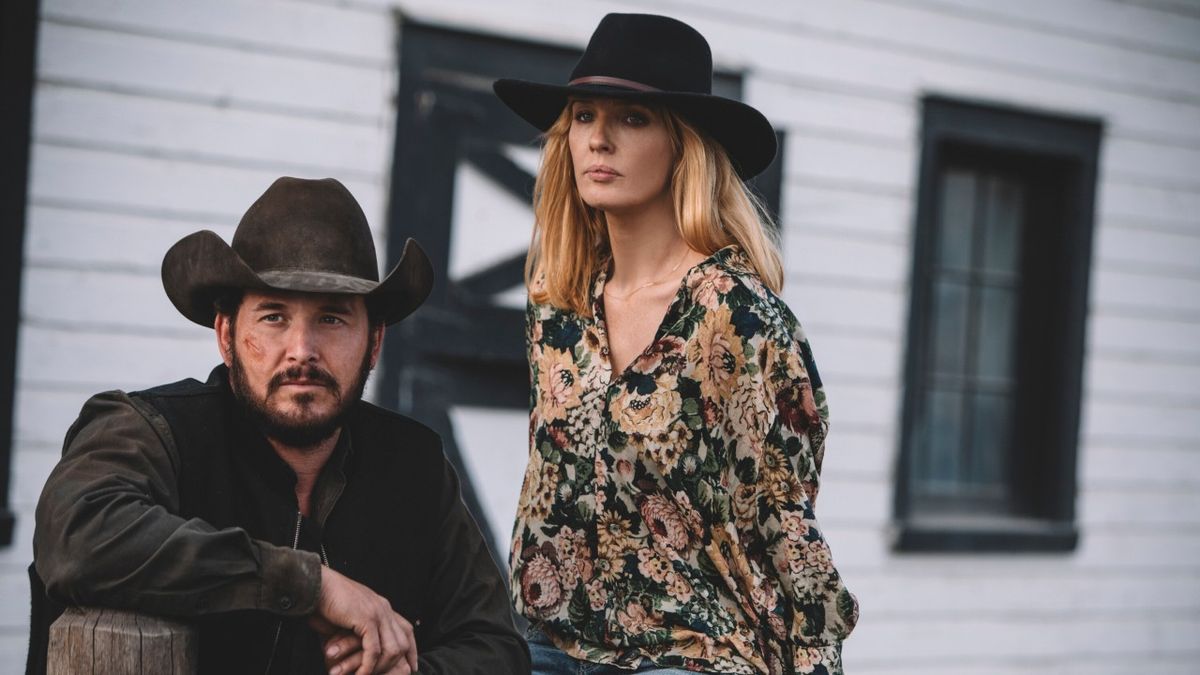
Set on a new ranch in Montana, far removed from the iconic Yellowstone property, the series introduces a different kind of battlefield. Here, Beth and Rip face enemies who no longer arrive on horseback with guns drawn. Instead, they come armed with legal contracts, political connections, and financial leverage.
The Dutton Ranch captures the evolution of the modern West, where cowboys now fight corporate developers, water-right disputes, and local governments. It is a war fought in boardrooms rather than open fields—a conflict without heroes, only survivors.
Family Is Not Always Defined by Blood
At the emotional core of the series is the relationship between Beth, Rip, and Carter, the boy they have taken in. Carter is not just a symbol of hope—he is a mirror reflecting everything Beth and Rip have lost.
The series asks a painful question: Can people forged in violence raise a child without passing on their darkness? There are no easy answers. The Dutton Ranch refuses to soften its narrative, allowing viewers to witness generational trauma, flawed parenting, and the fragile attempts at love made by deeply broken people.
Cinematic Language: When Nature Becomes a Character
Visually, The Dutton Ranch continues the franchise’s signature cinematic style. Vast Montana landscapes, natural lighting, slow-paced editing, and Americana-infused music create an atmosphere that is both breathtaking and unforgiving.
Nature in the series is not merely a backdrop—it is a silent judge, bearing witness to human ambition, love, and collapse. The land does not belong to anyone forever, and those who believe they own it are often the ones who lose everything.
Core Themes: Legacy and Letting Go
If Yellowstone was a story about preserving legacy at all costs, The Dutton Ranch questions whether that legacy is worth carrying forward at all. Beth and Rip represent a generation caught between a violent past and an uncertain future.
The series does not romanticize the idea of starting over. It acknowledges that the past cannot be buried easily—and that the instincts that once ensured survival can become destructive in a changing world.
The Place of The Dutton Ranch Within the Yellowstone Universe
The Dutton Ranch does not attempt to outshine Yellowstone. Instead, it accepts its place in the long shadow of the original series and uses that weight to tell a more intimate, character-driven story.
This is a series for viewers who grew up with Yellowstone—those no longer seeking grand wars, but the emotional consequences left behind once the battles are over.
Conclusion: A Story of Survival, Not Victory
THE DUTTON RANCH — BETH & RIP’S STORY CONTINUES (2026) does not promise a happy ending. What it offers instead is honesty—about love, power, and the cost of clinging to land, legacy, and identity.
It is the story of people who have won too many battles and forgotten how to live in peace. And in that fragile, imperfect struggle, The Dutton Ranch finds its soul: a dark, haunting, and beautiful modern Western ballad.