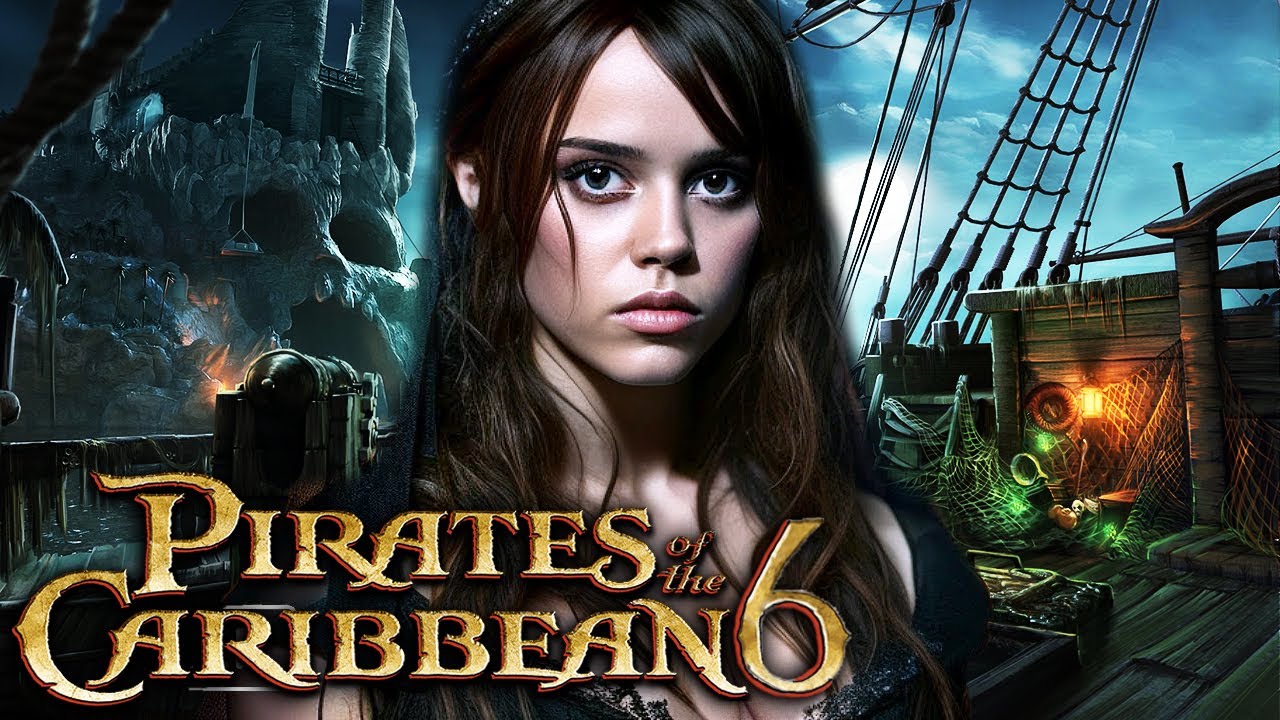
When Legends Become Warnings
“Every empire calls pirates criminals—until it needs one.”
In this imagined incarnation, Pirates of the Caribbean 6: Sea of Lost Souls does not begin with Jack Sparrow. It begins with his absence.
The world has changed. The sea has not.
This version of the sixth film repositions the franchise as a generational reckoning—a story about what happens when myths outlive the people who created them, and when freedom itself becomes a dangerous idea. Less fairy tale, more maritime political epic, Sea of Lost Souls dares to ask: What does piracy mean when the world is already owned?
I. A New Age of Empire
Decades after the last great pirate wars, the Caribbean is no longer wild—it is regulated.
Trade routes are militarized. The seas are divided by treaties written in European capitals by people who have never set foot on a deck. Piracy has not vanished; it has simply been renamed:
-
“Smuggling” when it serves the crown.
-
“Treason” when it does not.
At the center of this new order is The Maritime Compact, a coalition of empires that controls naval passage, commerce, and information. Freedom of the sea is a myth sold in museums.
And pirates—real pirates—are hunted into extinction.
Or so the world believes.
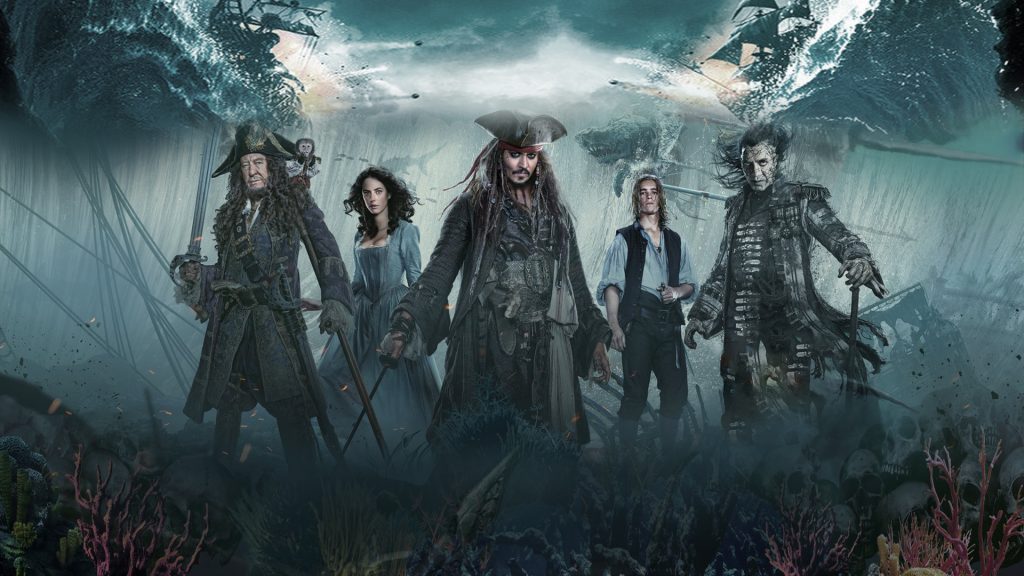
II. The Protagonist: Isla Cortez
Our story follows Isla Cortez, a young Afro-Caribbean navigator and salvager raised on the ruins of pirate lore. She is brilliant, pragmatic, and fiercely unromantic about legends. To her, piracy is not freedom—it is survival.
Isla makes her living recovering wreckage from forbidden waters, selling relics to collectors who romanticize the past while profiting from the present.
During a dive into a restricted zone, she discovers something impossible:
-
A perfectly preserved pirate ship.
-
No crew.
-
No decay.
-
And a name etched into the helm, deliberately scratched away.
The Sea of Lost Souls has been breached.
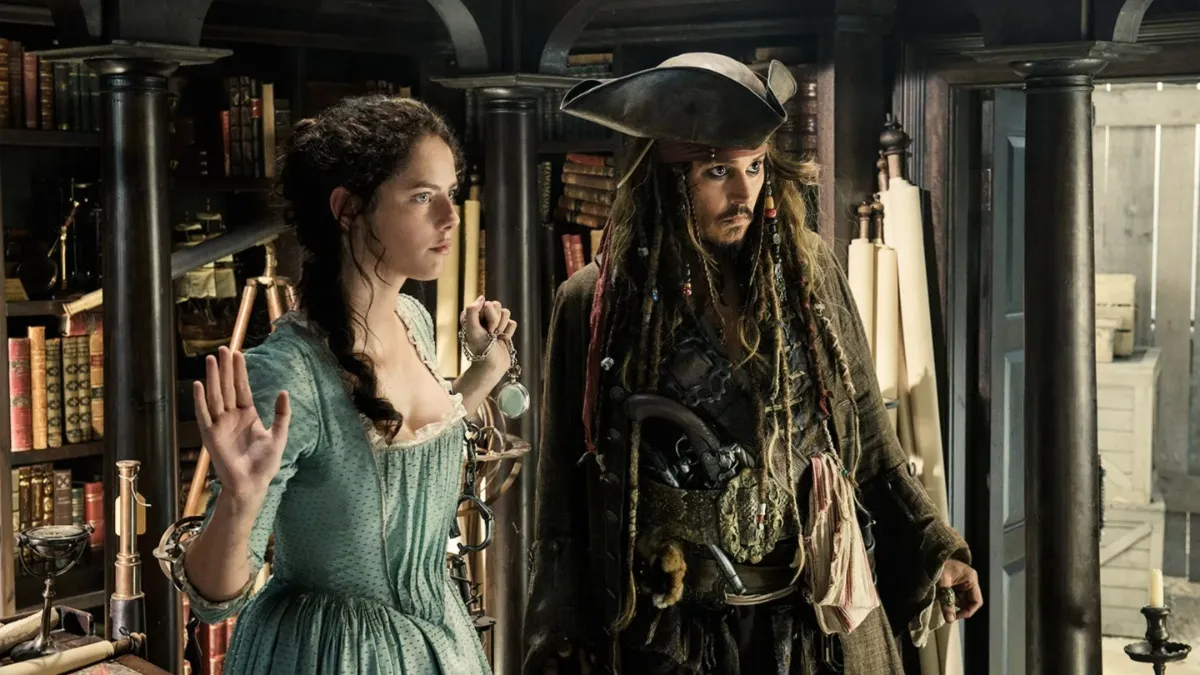
III. The Sea of Lost Souls Reimagined
In this version, the Sea of Lost Souls is not supernatural in the traditional sense.
It is a maritime anomaly—a region where countless battles, betrayals, and drownings have occurred over centuries, warping navigation, memory, and perception. Ships that enter often vanish not because they sink, but because they are erased from official history.
Empires deny its existence because acknowledging it would mean acknowledging their crimes.
The Sea of Lost Souls is where:
-
Slaves thrown overboard are remembered.
-
Mutinies are buried.
-
Unmarked naval massacres drift without record.
It is not haunted by ghosts—it is haunted by truth.
And the Compact is desperate to control it.

IV. The Shadow of Jack Sparrow
Jack Sparrow is never fully seen.
He exists as:
-
A scratched-out name.
-
A half-burned map.
-
Conflicting testimonies.
Some say he died drunk and forgotten. Others claim he sailed into the Sea of Lost Souls willingly, becoming part of it—a living rumor swallowed by the sea.
Throughout the film, Jack’s legacy is questioned, dissected, and politicized. Was he a hero? A nuisance? A symbol of chaos that accidentally protected freedom?
Isla does not care.
Until she finds Jack’s compass.
Unlike before, this compass does not point to desire.
It points to what has been stolen.
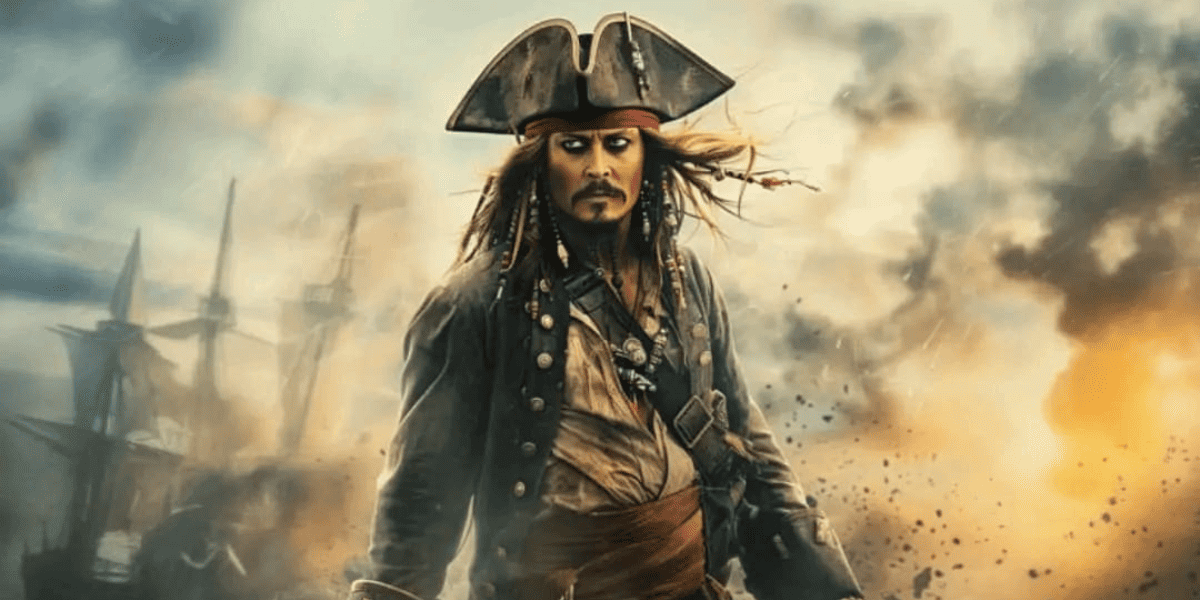
V. The Antagonist: Commodore Alistair Vane
Standing opposite Isla is Commodore Alistair Vane, a ruthless tactician and architect of the Maritime Compact. Calm, intelligent, and chillingly reasonable, Vane believes chaos is humanity’s natural enemy.
To him, pirates are not romantic rebels—they are obstacles to progress.
Vane’s plan is chillingly modern:
-
Use the Sea of Lost Souls as a black site.
-
Erase ships, people, and uprisings without trace.
-
Rewrite history by controlling what survives.
He does not want to rule the sea.
He wants to sanitize it.

VI. A Crew Without Legends
Isla assembles a crew not of famous names, but of the forgotten:
-
A former naval cartographer who falsified maps for the Compact.
-
A runaway deckhand born aboard a prison ship.
-
A mute gunner who communicates through knots and rigging.
-
A historian who believes piracy was the first true global resistance movement.
None of them want to be legends.
They want the sea back.
Their ship is not glorious—it is patched together, practical, unnamed. A direct rejection of myth.
And yet, the sea responds to them.
VII. The Collision of Past and Present
As Isla’s crew ventures deeper into the Sea of Lost Souls, the film shifts visually:
-
Clean imperial blues rot into rust and bone.
-
Navigation instruments spin uselessly.
-
Official maps dissolve.
Here, history bleeds through the surface.
Isla witnesses visions—not of pirates drinking rum, but of:
-
Shackled bodies thrown overboard.
-
Naval executions hidden from records.
-
Entire crews erased because they refused orders.
For the first time, Isla understands Jack Sparrow’s real crime.
He refused to be useful.
VIII. The Truth About Jack Sparrow
In the film’s most haunting revelation, Isla uncovers the truth:
Jack Sparrow did not conquer the Sea of Lost Souls.
He chose to disappear into it.
When the Maritime Compact first formed, Jack realized the sea was no longer a place for heroes. Rather than become a mascot or martyr, he sailed into the Sea of Lost Souls, scattering maps, lies, and contradictory legends behind him.
He became uncontainable.
A myth cannot be imprisoned.
IX. The Final Conflict
The climax is not a grand naval battle—but a confrontation of narratives.
Vane captures Isla and offers her a choice:
-
Help him chart the Sea of Lost Souls completely.
-
Or watch every unregistered sailor be erased forever.
Isla refuses.
Instead, she releases Jack’s compass into the sea.
The compass does not explode. It multiplies.
Suddenly, hundreds of false routes, phantom signals, and impossible paths flood imperial navigation systems. The sea becomes unknowable again.
Control collapses.
X. An Ending Without Closure
Vane survives—but his world does not.
The Maritime Compact fractures under uncertainty. Trade falters. Power decentralizes. The sea becomes dangerous again.
And that is the point.
In the final scene, Isla sails away—not toward legend, but toward responsibility. She throws Jack’s compass overboard, smiling faintly.
Behind her, the Sea of Lost Souls remains—unmapped, uncontrollable, alive.
A voice echoes faintly, perhaps imagined:
“That’s the trouble with freedom, love.
It never stays put.”
XI. Why This Version Matters
This Sea of Lost Souls reframes Pirates of the Caribbean as:
-
A story about historical erasure
-
A critique of empire and sanitized history
-
A passing of the torch without imitation
Jack Sparrow is not resurrected.
He is understood.
The franchise grows up—not by abandoning its soul, but by finally examining it.
Final Thought
Pirates of the Caribbean 6: Sea of Lost Souls (Version II) is not about bringing pirates back.
It is about remembering why the world tried so hard to erase them.
And in doing so, it proves that legends do not die.
They scatter.